HERMES: Healing Effects of Role Models for Empowerment and Solidarity
Can narratives about role models from disadvantaged groups — who overcome social disadvantages and defy systemic discrimination through acts of resistance — drive social change?
The HERMES project (Healing Effects of Role Models for Empowerment and Solidarity) answers this question by examining two pathways to social change:
- Among advantaged groups: perceptions of disadvantaged groups' empowerment and solidarity towards those groups.
- Within disadvantaged groups: expressed solidarity and experienced empowerment.
To do this, HERMES employs:


Online experiments
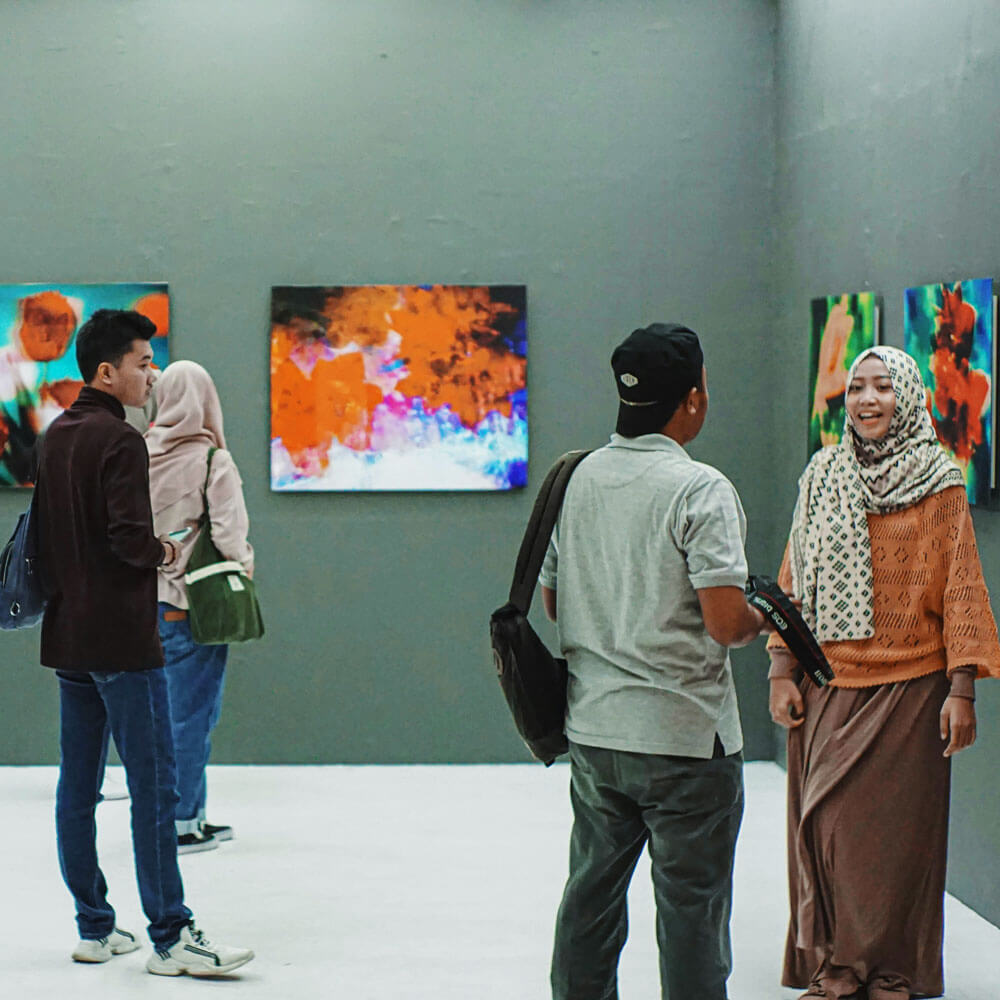
Field experiments in exhibition settings

Virtual Reality (VR) interventions
The project integrates social science, communication, arts, activism, and digital innovation. Findings will enhance the effectiveness of interventions for meaningful social change.
Aims
HERMES seeks to understand the effect of disadvantaged role models in promoting social change with and within less privileged groups.
Our goals are:
To understand if, why, and when narratives featuring these role models influence:
- Group empowerment perceptions
- Support for empowering initiatives, such as interpersonal solidarity, policy support or engagement in real empowering actions.
- To craft innovative tools for social interventions.
- To measure real solidarity behaviour.
Funding
This project has been funded by the Spanish Ministry of Science and Universities, with the National Grant “HERMES: Healing Effects of Role Models for Empowerment and Solidarity” (PID2023-151315OA-100) for the Research Groups (‘Culture, Cognition, and Emotion’ Consolidated Group: IT1598-22).
Migrant Women in the Household and Care Sector: Who Cares for the Carers?
Voices from the Land: Indigenous Communities in Action
Playing by their Own Rules: Women and Gender Non-Conforming Musicians
More Than a Label: Individuals Living with Mental Disorders

What if empowered migrants became the exemplars we look up to?
HERMES focuses on narratives featuring migrant role models — people who have faced discrimination and structural barriers and responded with collective or individual empowerment rather than resignation.
These exemplars are not presented as exceptional individuals who have beaten the odds alone, but as people embedded in communities of solidarity, whose stories reflect shared struggles and collective agency.
We work with organizations such as SOS Racism and Refugee Today to ensure these role model narratives are grounded in real experiences — covering themes such as employment discrimination, precarious working conditions, access to housing, and social exclusion — whether organizing a workers' strike, fighting for fair housing, or demanding recognition in the workplace.
Who gets to tell the migrant story?
Migrant people are often represented in the media through frames of crisis, insecurity, or victimhood, reinforcing images that feed threat perceptions, fear, pity, and paternalism.
These dominant narratives erase the complexity, agency, and resilience of migrant communities — and they have real consequences for how societies respond to migration.
What is missing are counter-narrative role models: people whose stories of resistance and empowerment challenge the dominant script and offer a different image of what it means to be a migrant.


When the story changes, does the world change with it?
Can role model narratives of migrant empowerment counter dominant media framings by evoking emotions such as admiration or moral anger? Can these exemplars of resistance inspire solidarity — both within and beyond migrant communities — and mobilize people toward meaningful social change?
How do we put it to the test?
We use a combination of nation-wide online experiments and exhibition-based and virtual reality-based field experiments.
In these laboratory or field experiments, participants are randomly exposed to individual or collective empowerment role model narratives paired with portrait images of migrants — including validated refugee photographs provided by our partners like Refugee Today or Red Acoge.
We measure emotional responses and solidarity responses such as social support intentions, support for policies empowering migrants, and real prosocial behavior by means of writing a supportive message to be shared with migrant communities.

Contact us
For general inquiries about the HERMES project, collaborations, or media requests, please reach out to us using the details below.
Principal Investigator: Magdalena Bobowik